bookmark_borderWhat are the Types of Surety Bonds Needed for the Auto Industry?


Types of Surety Bonds Needed for the Auto Industry - How Do Surety Bonds Protect Customers in the Automotive Industry - animated cars in blue background

How Do Surety Bonds Protect Customers in the Automotive Industry?

If you’re looking to purchase a new car, your lender may ask you to obtain a surety bond. If not, they might offer one as an extra layer of safety. A surety bond acts as loan insurance and can be used as collateral if you miss payments or conduct fraud.

The automobile business is a significant part of the US economy, accounting for 2.2 percent of GDP in 2016. consumer confidence and faith in the safety of their automobiles are critical to the industry’s success. It might be difficult to know how to protect oneself while purchasing a vehicle when so much is relying on this trust.

Fortunately, surety bonds safeguard consumers by guaranteeing payment if the dealer goes out of business before you’ve finished paying off your car loan or lease.

What is a Surety Bond for a Motor Vehicle Dealer?

A motor vehicle dealer surety bond is a sort of insurance that protects customers against being taken advantage of by a shady car salesman. The dealer is required to carry liability insurance, but this only protects the buyer’s property, not their wallet or their peace of mind. A surety bond adds an extra layer of security for buyers, and studies suggest that it can minimize customer complaints by up to 30%.

Dealers are required to post this bond, which they will lose if they break any laws or regulations. All monies from used automobile transactions must be deposited in an escrow account until the vehicle has been examined by the Department of Motor Vehicles and ownership has been transferred. This assures that if there is an issue with the transaction, the cash will be returned to the buyers.

What is a Surety Bond for an Automotive Dismantler or Parts Recycler?

A surety bond is a type of insurance that ensures the fulfillment of a promise, such as the repayment of borrowed funds or property. In some areas, a surety bond for automobile dismantlers and parts recyclers may be required by law to protect your company from financial harm if you fail to pay your suppliers.

A surety bond is the most frequent sort of bond because it ensures that someone will do their duties with care and skill. When you buy parts from a local dismantler or recycler, it’s critical that they have this form of liability insurance in place so that they can be held liable for any damages caused by their negligence.

The Surety Bond for Car Dismantlers and Parts Recyclers protects your business from theft, fraud, and failure to pay for vehicle disposal costs.

What is a Surety Bond for a Driving School?

Surety bonds for driving schools are required in order for them to operate legally. They assist in ensuring that if a pupil does not receive the education that was promised, the driving school is held accountable. These bonds can be costly for young firms, but they’re worth it in the end because you wouldn’t be able to get money if your company failed or shut down without them.

A surety bond between a driver education provider and the state protects the quality of training, the safety of pupils, and the financial accountability of any cash received.

A surety bond for a driving school can be issued from your local DMV or vehicle insurance provider. Because it does not require much labor on the part of the company issuing the bond, the cost of purchasing this type of bond is usually low in comparison to other bonding choices.

What is the significance of a vehicle surety bond?

Many individuals are unaware of the car surety bond, which is a sort of insurance. It’s significant because it protects the policyholder from financial loss if their car is stolen or damaged in an accident, and they are determined to be at fault.

Auto surety bonds are essential for any company that works with automobiles. Insurance firms, dealerships, auto repair shops, and other associated businesses frequently demand them. Auto surety bonds protect customers in the event of fraud or dishonesty on the part of the company where their vehicle is being fixed.

If something goes wrong with a customer’s automobile after it has been serviced at a given site, they may not be able to recover damages from that location without proof of responsibility if they don’t have an auto surety bond.

An auto surety bond is always included as part of a reputable company’s services because it prevents them from being sued if there is no evidence that they were responsible for damage to a vehicle while it was in their care.


Interested? Know more by checking out Alpha Surety Bonds!

bookmark_borderWhat Is a Bonded Title and Why Is It Needed?

Bonded Title - What is the meaning of a bonded title - House Interior and Exterior in Dark Green Background

What is the meaning of a bonded title?

A bonded title is a security that combines two different types of securities, such as a bond and a stock. By allowing investors to choose how they want to invest their money, this hybrid instrument provides more flexibility than either of the original securities.

Investors can acquire a mix of bonds and stocks or just one of each; they can also sell back any portion of their investment at any time without penalty. Because both forms of investments carry different risks, this type of security helps spread those risks out for better value protection.

This sort of insurance is paid for by the borrower as part of the closing process, and it covers up to 125 percent of the loan’s value. It also covers lenders’ fees if they have to demolish structures on the property owing to abandonment or inactivity.

A bonded title functions similarly to an insurance policy in that it protects you if the value of your vehicle exceeds its market value. A “collision damage waiver” is the most prevalent sort of bond. If you have this, most auto body shops will waive your deductible while fixing your vehicle after an accident if you have it.

What is a title bond for a vehicle?

There are alternative possibilities if you need to buy a car but don’t have the cash on hand. Purchasing a vehicle with an auto title bond as collateral for your loan is one alternative.

This sort of financing ensures that the lender will be reimbursed if something occurs to the vehicle before it is fully paid off. However, there are some drawbacks to this type of financing, such as not being allowed to drive the automobile until it is paid off in full and having higher monthly payments than standard loans.

If you’re not sure what a vehicle title bond is, it’s basically a sort of security for the loan you took out on your automobile. It will usually safeguard the lender if you fall behind on your payments and the lender needs to repossess the vehicle.

If this happens, you will lose all ownership rights as well as any equity you may have built up over time. Making sure your payments are done on time and that no deadlines are missed is the greatest approach to avoid having your car repossessed.

What is the purpose of a bonded title?

A bonded title is a sort of title insurance that ensures the buyer’s ownership of the property. If there are any problems with the mortgage or deed, a bond is created for the amount of the purchase price, which becomes payable if there are any problems with the mortgage or deed.

This can assist to protect your investment and provide you peace of mind by ensuring that your property rights are protected regardless of what happens. With so many games having hidden charges, it’s a good idea to do some research before making a selection.

With a bonded title, you may rest assured that your property taxes are current and paid in full. When it comes time to sell or refinance, the bonding agency guarantees payment of any past taxes owed on the property, lowering your risk.

Lower prices, easier financing, improved home value, and more cost-effective tax payments are just a few of the advantages of a bonded title.

A bonded title assures that if someone who does not own the property attempts to sell it or obtain a mortgage on it, the rightful owner will be notified so that they can intervene and prevent the sale or loan from taking place. Bonds are normally priced between $500 and $1,000, but there are other expenditures such as annual renewal fees, insurance payments, and more.

Is a bonded title required?

Bonded titles establish a company’s status as a licensed insurance agent. It’s critical to understand the difference between a bond and a license, as well as how they might benefit your business.

Those who handle securities or funds, such as brokers and dealers in stocks, bonds, mutual funds, or commodities futures contracts, are obliged to have a bond.

If you wish to operate machinery with moving parts, such as power saws and presses, work on electrical wiring, install windows, or do anything else that could endanger the public’s safety, you’ll need a license. If you’re not sure if you need one of these licenses, talk to an attorney before spending time or money on it.

If someone contests your ownership or if there are any errors on the deed or other papers, title insurance will protect you. It’s a good idea to have your title insured, especially if you own a home with the land because mistakes like these can be difficult and expensive to correct.


Interested? Know more by checking out Alpha Surety Bonds!

bookmark_borderFidelity Bond and How Can You Get One

Fidelity Bond - What Is a Fidelity Bond and How Does It Work - Fidelity Bond in Blue Background

What Is a Fidelity Bond and How Does It Work?

A fidelity bond is a type of insurance that a person or corporation buys to protect themselves against the danger of losing money due to fraud. From banking and finance to healthcare and medical research, fidelity bonds are employed in a variety of industries.

If you manage a small firm with only one employee, this type of coverage can be helpful, but what about major corporations? Large enterprises must likewise be concerned about similar occurrences, thus they must have this protection in place as well.

The cost of the bond varies based on the form, although it can be as low as $200, with the majority costing between $500 and $1,000. An applicant must submit fingerprints and complete a criminal background check in order to get this bond.

They’ll get their own personal identification number once they’ve been accepted, which will give them access to your account and allow them to assist you to monitor transactions.

What is the definition of a business service bond?

A business service bond is a sort of financial instrument that can be used for a variety of objectives, including securing agreement performance, ensuring indemnity, and meeting legal requirements. In a nutshell, it’s company insurance.

Businesses that provide services to their clients frequently require bonding. This is because, even if the customer does not pay for the service upfront, there is always something at stake for them.

Performance bonds and payment bonds are the two most prevalent forms of bonds. Businesses are protected from nonpayment by performance bonds, which guarantee that they will be reimbursed for their services if a customer fails to keep his or her end of the contract.

Payment Bonds protect you from non-competition lawsuits from former employees who may have had access to sensitive information about your company’s operations or trade secrets before leaving.

The type of business service bonds a firm can offer is determined by its creditworthiness and financial standing, with higher restrictions for more prominent companies. Bid bonds, performance bonds, labor and materials contracts (BLMC), bonding against public work (BAPW), and other types are available depending on your demands and industry.

What is the purpose of a fidelity bond?

A fidelity bond is a type of assurance that ensures an employee’s honesty and integrity. A fidelity bond protects a company from employee fraud, theft, embezzlement, or other financial misbehavior while on the job. Many businesses demand fidelity bonds to safeguard employers from losses caused by dishonest personnel.

A fidelity bond can be used to protect a contract or as loan collateral. Fidelity bonds protect organizations from losses caused by employee dishonesty and theft by guaranteeing that they have enough assets to pay their duties in the event of a disaster.

These bonds range in price from $5,000 to $500,000 per year, depending on the size of the company and its level of intricacy. Before an organization may be bonded, it must first show that it complies with all applicable bonding regulations in each state where it operates.

What is the procedure for obtaining a fidelity bond?

A fidelity bond is a sort of insurance that covers damages caused by fraud, dishonesty, or other unethical behavior. “Employee stealing” is another name for this coverage. The amount you can receive is determined by the size and location of your company.

For example, if you have less than $500,000 in assets and operate out of your house with no workers, an individual policy via an insurance firm may be less expensive.

So, what’s the best way to go about getting one? It all starts with determining which sort of bond is best for your needs: indemnity or surety. Then, from the list of providers on our website, select the amount, coverage period, and any extra conditions such as collateral.

What is an ERISA Bond, and how does it work?

ERISA bonds are a sort of bond that can assist protect a company from going bankrupt. ERISA stands for Employee Retirement Income Security Act, and it is a sort of bond designed to safeguard retirees in the event of a company’s bankruptcy.

Many organizations have been facing pressure on their bottom line as a result of a growing number of individuals retiring, leading many to contemplate bankruptcy as a possible solution. Employers can use ERISA bonds to create a sort of insurance policy to safeguard against this possibility.

Depending on the terms agreed upon with the insurer and any other collateral handed up by the employer or its subsidiaries if they go bankrupt, these bonds will cover at least 50% or more.

Interested? Know more by checking out Alpha Surety Bonds!

bookmark_borderWhat are the Must-Have Types of Insurance for Construction Companies?

Types of Insurance for Construction Companies - What is General Liability Insurance, and how does it work - contractors in black and orange background

What is General Liability Insurance, and how does it work?

What is General Liability Insurance, and how does it work? This policy protects the insured’s general liability for claims stemming from accidents, torts, or other occurrences on their property. The goal is to shield a person’s assets and income from litigation that may occur as a result of irresponsible activities on his or her part.

General Liability Insurance is divided into three categories: Property Damage Coverage – this covers losses resulting from damage caused by you or your workers. Personal Injury Protection (PIP) covers bodily injury (i.e., physical injury) as well as property damage (i.e., personal property destruction). Medical Payments Policy-this coverage compensates for medical expenditures incurred as a result of an accident at your workplace, but it does not cover death.

If someone sues you for something they believe is your fault, General Liability Insurance can cover the expense of any legal bills, attorney’s fees, or judgments. It also covers the costs if someone gets hurt on your property and attempts to blame it on something you did incorrectly.

This form of insurance will cover you if something goes wrong in your office building, restaurant, or cafe. A general liability policy assures that no matter what happens in your company interactions, you are protected.

What are Surety Bonds and How Do They Work?

surety bonds are a type of insurance that ensures that one party will fulfill their obligations under a contract. When someone needs money and pledges property as security, when borrowing goods from a bank, or when contracting out work, it’s widely employed.

The surety bond coverage amount is determined by the risk involved in the agreement.

Bonds can be used for a variety of purposes, including corporate and government contracts, as well as lawsuits and other legal matters. What you should know about bonds is that they are exposed to various levels of risk, so they may not be the ideal option if you’re searching for a low-cost strategy to protect your assets.

A surety bond can be used for a variety of purposes, including construction projects and ensuring that a condemned person does not flee before their trial. In situations when one party owes another money, such as home improvement work, surety bonds are frequently needed by law.

What is Commercial Auto Insurance, and How Does It Work?

In the case of an accident, commercial auto insurance covers you and your vehicle. Medical bills, property damage, and liability charges are all covered. It also protects any passengers who are injured or killed while traveling in your car in an accident.

The value of obtaining this form of insurance cannot be emphasized because it can protect you financially and emotionally from a variety of disastrous repercussions that could otherwise leave you vulnerable to considerable financial loss and emotional pain.

Personal vehicles used by employees in the course and scope of their job, as well as any other vehicle rented or leased by a business, are normally covered by commercial auto insurance.

You can get protection against damages to third parties as well as your own car with commercial auto coverage, as well as legal liability for bodily injury or property damage caused while driving on behalf of your employer/company, medical payments if someone is injured as a result of an accident you were involved in while working with the company’s vehicle, and uninsured motorist coverage.

What is Worker’s Compensation Insurance, and how does it work?

Worker’s compensation insurance is a sort of liability insurance that protects employers if one of their employees gets hurt on the job. These injuries are frequently the result of an accident or injury, but they can also be the result of a work-related sickness. In either case, it is critical for companies to carry worker’s compensation insurance so that they are protected in the event of an accident.

Compensation for Employees If you are injured on the job, insurance can help you pay for medical bills, missed earnings, and other benefits. It also includes death payments in the event of a death caused by a work-related accident or disease.

Workers compensation insurance is a system of work-related benefits in the United States that provides wage replacement and medical care to employees who are injured or ill as a result of their job. Workers’ compensation programs are governed by state legislation.

The National Council on Compensation Insurance (NCCI) establishes standards for how each state’s program should be constructed within the legislative constraints. What types of employees must be covered under a workers’ compensation plan, whether businesses can choose their own insurer, and other provisions vary by state.

Interested? Know more by checking out Alpha Surety Bonds!

bookmark_borderHow Can I Purchase a Surety Bond in Texas?

Surety Bond in Texas - How Can I Purchase a Surety Bond in Texas - Contractor Fixing a Solar Panel Board Blue Backgrounf

In Texas, how can I obtain a surety bond?

A surety bond is a contract between a company and the state or federal government that is often necessary before starting or continuing a business. A Texas surety bond will assist you in meeting the state’s criteria for doing business there.

If your company is based in Texas, you must comply with the state’s surety bond regulations. A surety bond is a financial assurance that requires one party (the principal) to pay another (the obligee) in order for them to meet their legal obligations.

In summary, if your firm does not have a surety bond on file with the State of Texas, you could face fines or possibly be barred from doing business in the state.

The process of starting a new business can be overwhelming, and many small businesses require assistance along the way to go through the lengthy process of obtaining licenses and permissions, as well as seeking financing from lenders who may require collateral before granting your funding request.

In Texas, where can I get a surety bond?

A surety bond is a legal agreement between a person and the state or federal government. It ensures that the person will follow specific rules and regulations, including obeying the law, paying taxes, and carrying out their responsibilities as a citizen. Surety bonds are often only secured by persons who need to demonstrate their ability to be trusted with responsibilities such as property ownership or business management.

A surety bond ensures that an individual, company, organization, or government agency will perform as promised. It can be used for a variety of objectives, including securing tax payment, ensuring the completion of construction projects, and preventing financial loss due to embezzlement.

A surety bond may be purchased from a variety of bonding businesses, but you must first identify the correct one and ensure that they will supply you with what you require before proceeding. It’s difficult to know where to begin when there are so many different sorts of relationships available!

What is the cost of a surety bond in Texas?

What is the definition of a surety bond? In Texas, a surety bond guarantees that the contractor will finish the job and meet their responsibilities to you. What does it cost to obtain one? It varies depending on the type of contract, but we determined that the average value is between $500 and $1,000.

You’ll need to hire a licensed contractor if you’re not building your own home. Before applying for one, you should see whether there are any other prerequisites or qualifications. For instance, the candidate must be at least 18 years old and have worked as a contractor for at least five years with no more than three claims filed against them.

The cost of a surety bond is determined by a number of criteria, including the risk involved in the agreement and the amount of risk you are prepared to take on.

Individuals in Texas can purchase four types of bonds: indemnity bonds, which pay out damages from lawsuits or claims; fidelity bonds, which protect against employee theft or fraud; bid bonds, which guarantee payment when bidding on public projects; and cash bonds, which guarantee cash payments at specific times.

In Texas, is a surety bond required?

You may have heard the term “surety bond” and wondered if it applied to your organization as a business owner. It’s crucial to understand that there are various sorts of surety bonds, and some firms are required by Texas law to get a specific type.

A surety bond is a contract that ensures one party will fulfill its responsibilities to another. An obligee, or the person seeking the fulfillment of an obligation, must submit a claim with the court and prove damages in order to get what they are due by the obligor, or the person who owes them money or something else. If you have been sued in Texas for any form of debt, you may be asked to post a surety bond.

In Texas, who issues surety bonds?

What is the definition of a surety bond? This type of tie ensures that one party will fulfill a promise made to the other. Bonds can be purchased by both businesses and individuals in Texas. A surety bond can be used for a variety of things, from public works projects to personal finances.

Despite its versatility, there are a few things you should know about this sort of bond before buying it to avoid any potential issues down the road.

By signing a contract with the obligee, the principal pledges to provide security, and the obligee ensures that it will fulfill its duties. Both parties are liable for any losses suffered as a result of their respective commitments.

Interested? Know more by checking out Alpha Surety Bonds!

bookmark_borderHow Can I Purchase a Performance Bond in Texas?

Performance Bonds in Texas - How Can I Purchase a Performance Bond in Texas? Posted on September 27, 2021 by BondWriter performance-bond In Texas, how do I obtain a performance bond - two men shaking hands in white and green background

In Texas, how do I obtain a performance bond?

A performance bond is a financial instrument that ensures that a project or contract will be completed. Contractors can utilize this for their own protection, but it is also mandated by law in some instances. Typically, a performance bond is purchased through an insurance company, which will charge interest on the bond’s value until it is paid off.

To obtain a performance bond in texas, you must first register as an “owner” with your local county clerk.

Once you’ve got the relevant paperwork, fill it out entirely and submit it along with all supporting documentation, such as proof of insurance coverage, references, copies of licenses or previous bonds issued by other bonding agencies, and payment of the required costs.

In Texas, where can I receive a performance bond?

A performance bond is an agreement between two parties that is legally binding. The obligor, the first party, undertakes to perform at a given level for a set length of time in exchange for money from the obligee, the second party.

If the obligor fails to meet its duties under this contract before it ends, the obligee will be entitled to a refund of any payments paid to them, as well as any damages or penalties imposed by law.

Requiring performance bonds has a number of advantages, including better compliance with contractual obligations and a reduced need for litigation. However, there are also disadvantages, such as greater expenses and delays in getting work started, because all parties must agree on a monetary sum that would be paid if one party fails to keep their half of the contract.

Although performance bonds are available from a variety of sources, not all performance bond suppliers serve Texas.

In Texas, how much does a performance bond cost?

A performance bond is a contract between a contractor and the project owner that requires the contractor to guarantee the quality of their work. When contracts are worth more than $25,000, performance bonds are frequently necessary.

Form B-990, which is exclusively available on the Texas Department of Insurance website, can be used to secure a performance bond. Because there are certain conditions that must be completed by both parties before this sort of contract becomes legitimate, the process of acquiring a performance bond might take up to 7 days before it becomes effective.

The performance bond is a refundable security deposit that protects the hiring organization. This provides them with some protection in the event that your work is damaged or has other issues.

The sum varies based on the type of contract; for example, there are different criteria for a construction project than for an office building. Before signing any contracts, if you’re not sure how much your project will cost, ask!

Is there a need for a performance bond in Texas?

Before bidding on public construction projects in Texas, businesses must submit a performance bond. This assures that the company is financially sound and that any losses or disruption caused by their work on the project will be adequately compensated. The cost of the bond varies based on the scope of the repair, but it often ranges from ,000 to $10,000.

When deciding whether or not you need a performance bond, one of the most important factors to examine is whether or not you have the cash flow to cover it. If your cash flow isn’t strong enough, you might want to reconsider bidding on certain contracts or negotiate with your customer to pay a portion upfront so that they can provide some form of guarantee for their half of the bargain.

The amount of the bond is determined by the consequences of failing to meet the contract’s commitments. There are many factors to consider when estimating this figure, but Texas law mandates that you have at least 10% of the entire contract value estimated before soliciting bids from contractors.

In Texas, who issues a performance bond?

A performance bond is a contract between two parties that ensures that one party’s commitments are met. Performance bonds can be issued by a variety of entities, including people, businesses, and even governments. A performance bond is also a sort of insurance policy that ensures that a building project is completed.

Only government officials and workers are required to deposit a performance bond before taking office in Texas. This guarantees that these employees carry out their responsibilities as outlined in the contract they signed with the municipal council or elected board members who recruited them for this post.

In the event that a contractor fails to complete a project, the state will issue a performance bond to safeguard the interests of all parties involved. This can be a person or a business that has been approved by the Texas State Comptroller’s Office.

This sort of bond ensures completion and protects against losses that may occur as a result of non-performance by someone who got into a building contract.

Interested? Know more by checking out Alpha Surety Bonds!

bookmark_borderDifferentiating Payment Bonds and Performance Bonds

Payment Bond - What is the definition of a payment bond - Payment and Performance Bond Images in Pink Background

What is the definition of a payment bond?

A payment bond is a sort of insurance that protects both the employer and the employee in the event of payment problems. It works by covering lost pay, unpaid taxes, and other penalties that may arise while working on a project.

If a company fails to pay an employee’s salary or benefits after they’ve completed work on a project, for example, the worker may be entitled to reimbursement through their payment bond.

Any organization that does not give a regular paycheck, such as freelancers or small businesses, needs a payment bond. It adds an additional degree of security against client non-payment by requiring clients to post appropriate collateral before beginning work.

This sort of bond guarantees that the contractor will finish the job on time and on budget. If they don’t, the person who posted the bond might be paid by using it as a guarantee against any damages suffered as a result of the job not being completed. Payment bonds are sometimes known as performance bonds, and their names vary according to state legislation.

What is the definition of a performance bond?

A performance bond is a contract between you and the company that allows them to receive reimbursement if they are dissatisfied with your work or if the project is not completed. It can be used to create a contract for a service, such as landscaping, or an event, such as catering. This contract ensures that both parties fulfill their responsibilities and protects you from nonpayment.

When it comes time to perform on whatever agreement was reached, the performance bond ensures that money will pass hands between both parties if everything goes smoothly. If one side fails to keep their half of the contract at any point throughout the negotiation, they must compensate for what is missing by either paying back or offering a mutually agreed-upon substitute item.

“Liquidated damages” is another term for this. Someone renting out their automobile and agreeing on a set price per day for use is a popular example, but if they do not return it within 24 hours of renting it out, they must pay twice the amount.

When there are disagreements over completed work or it is necessary to pay for additional work to address deficiencies in completed work, the owner might collect a performance bond. Performance bonds are commonly employed on large construction projects involving a significant amount of money and time, such as the construction of homes or office buildings.

What distinguishes a payment bond from a performance bond?

A payment bond is a type of insurance that ensures an individual’s, business’s, or government’s performance. The goal is to protect against losses incurred by a third party who has exchanged goods or services for money.

If someone owes them money for completed work and they are unable to collect it, they may be able to submit a claim with their bonding company if the person who owes them money had previously bonded.

A performance bond ensures that the contractor will fulfill their contractual responsibilities, while a payment bond ensures that the contract’s owner will pay for the work that has been accomplished.

The main distinction between these two sorts of bonds is that a payment bond has no restriction on how much can be paid out if something goes wrong, but a performance bond specifies exactly how much you’ll have to pay if things go wrong.

Payment bonds ensure that the contractor is paid for work done before the owner releases any funds. Performance bonds ensure that if something goes wrong, the contractor will be compensated in order to complete the project as promised.

What is a payment bond and how does it work?

A payment bond is a sort of security that the government or a corporation may need before completing a contract for goods or services. A payment bond assures that money will be paid once the agreement has been fulfilled in order to settle for any outstanding debts.

The purpose is to protect the party who has contracted for goods and services from financial loss if the other party fails to fulfill contractual obligations and defaults on payments, as well as to shield the party who has contracted for goods and services from liability if damage occurs during the performance.

A “surety” is a third-party agent who represents both parties and offers bonds that guarantee full or partial payment if one party fails to keep their end of the contract. When this happens, they are normally forced by law to pay off any outstanding debts between them, plus interest, before they can pursue other assets such as cash, bank accounts, or real estate.

The procedure for obtaining a payment bond differs depending on who wants one and what they’re seeking, but in general, the person requesting the bond must explain why they need one and how much money is required.

Following the examination of this material, if it is authorized, paperwork must be completed, along with signatures from both parties consenting to the terms.

What is a performance bond and how does it work?

When engaging in a contractual arrangement, a performance bond is a type of financial assurance that is usually required. If the contractor fails to fulfill his or her contract responsibilities, the surety will be held responsible for doing so in their place.

A performance bond can either be an indemnity, in which payment is paid directly to the party who has been harmed by the contractor’s default, or a guaranty, in which payments are provided to third parties and may also contain insurance against loss and damages.

Performance bonds are governed by state law, and criteria for coverage levels and other terms, such as time periods during which claims may be submitted, differ from one jurisdiction to the next. Before entering into any deal, you should always counsel with an experienced business attorney.

Interested? Know more by checking out Alpha Surety Bonds!

bookmark_borderDifferentiating Bid Bonds and Performance Bonds

Bid Bonds - Differentiating Bid Bonds and Performance Bonds - Modern Kitchen in Gray Scheme - Gray Background

What is a bid bond, exactly?

A bid bond is one of many documents that a contractor must have in order to work on public projects. A bid bond ensures that the contractor will pay the amount specified in the contract if the project is not completed. Depending on how much money you’re competing for and your credit score, the cost of this paperwork can range from $5,000 to $25,000.

A bid bond is a type of surety that ensures someone will accomplish the job they claimed they would do. Bid bonds are often required for contracts and bids to ensure that the firm or individual bidding has enough money to finish their part of the deal without causing financial harm if they fail to do so.

The best way to think of it is like insurance: you can’t get insured unless you have a bid bond; however, once you have one, you may work on your project without concern of losing any money if something goes wrong.

What is the definition of a performance bond?

a performance bond is a promise from a third party that if an organization or individual fails to meet their obligations, they will be compensated. Performance bonds are frequently required for major contracts and can be used in any business, although building projects are the most popular.

In rare situations, the project owner may be required to submit a performance bond before work can commence on the project. When bidding on a contract with a public institution, such as a government agency or a school district, a contractor may be required to provide a performance bond as part of their bid proposal.

The size of the performance bond varies depending on the situation and kind of agreement, but for projects exceeding $500K USD, it normally ranges from 10% to 20% of the entire expected cost.

If workers or contractors fail to finish their work on time or in line with the contract’s requirements, a performance bond will be utilized as compensation. Those who want to compete on government contracts, for example, are usually compelled by law to post these bonds.

Employers frequently require them before hiring someone to undertake any task for them. This way, if something goes wrong throughout the process, money will be set aside to cover it and ensure that everyone involved is compensated fairly.

What distinguishes a bid bond from a performance bond?

A bid bond is a payment made in advance of a firm’s bid that the company will lose if specific terms and conditions are not met. A performance bond ensures that one party will carry out the terms of a contract or agreement.

Because they both cover fees in the event of a contract default, the two are frequently misunderstood. However, because the two bonds have substantial distinctions, it’s critical to understand what you need before making any commitments.

A performance bond ensures that the project will be finished according to specifications, or the guarantor will compensate the project’s owner for any losses.

A bid bond ensures that if you get a contract, you’ll be able to pay your bills and avoid going bankrupt if your firm fails. They’re distinct tools with distinct functions.

What is the procedure for a bid bond?

A bid bond is a type of payment and performance assurance that allows qualified contractors to bid on public works projects. The procedure begins with the contractor filling out a qualification application.

They must also provide information about their business, such as how long they’ve been in operation, any existing contracts, and whether or not they’re a minority-owned company. If the contractor meets all of the requirements set forth by the government agency in charge of the project, he or she is eligible to submit a bid.

Before being authorized to work on-site at all, the contractor will be required to present proof that they have proper insurance coverage after submitting their proposal.

What is a performance bond and how does it work?

A performance bond is an agreement between two people or organizations in which one side pledges to be accountable for the other’s actions. The most prevalent application of this sort of contract is in construction, where a client may demand a contractor to post a performance bond as insurance against non-performance.

A performance bond is an agreement between the person or company who will provide the goods and services and the person or company who has placed the order for those goods and services. In the event that any party fails to perform as agreed, the two parties agree to hold each other harmless.

If someone promises to paint your house for $2000 but only finishes half of the job before quitting, you have the right to sue them for damages under your contract. It’s doubtful that this will happen because they’ve posted a performance bond with you for $4000 worth of work, which means they’ll owe you double the agreed-upon sum if they don’t finish.

Interested? Know more by checking out Alpha Surety Bonds!

bookmark_borderWhat Are Janitorial Bonds and Why Your Business Needs One

Janitorial Bonds - What are janitorial bonds - Individuals Cleaning in Blue White and Yellow Theme

What are janitorial bonds, and how do they work?

A janitorial bond is a type of surety that ensures that an event or contract will go off without a hitch. These bonds are frequently used to ensure that property will be cleaned by a contracted business after building work is finished.

This form of a bond can also be utilized in other situations where cleaning services are required, such as when a family member passes away and the home needs cleaning out before it is sold.

These bonds are a simple method to diversify your portfolio by investing in a rising industry that pays a consistent dividend. The bonds have a set interest rate, so you know exactly how much money you’ll get when they mature. Bonds can be purchased directly from corporations or through bond funds, so there are various possibilities based on your risk profile.

When do you need a janitorial bond?

It’s critical to know the ins and outs of janitorial bonding if you’re a business owner. You may believe that your business is too tiny to require this type of coverage, but if you have employees on the premises or hire contractors to work on your property, you may be required by law to carry a bond.

Any contractor or employee working on your property will be required to obtain a “bond” from an insurance firm. This guarantees that the person has been thoroughly vetted and meets all of the state board’s requirements before being granted access to your premises. The price of these bonds varies based on the services they cover (i.e., commercial cleaning vs office administration).

A janitorial bond guarantees that the firm will pay for any damages they incur in order to return the property to its pre-cleaning condition. Another reason could be that if you wish to start your own cleaning service, you may be obligated by law to do so because their field of work poses a risk of harm and contamination.

What is the purpose of a janitorial bond?

Many people believe that custodians are only part-time employees who clean up after the children return home from school. They believe that janitors do not require bonding because they do not come into contact with any valuable items or information. This, however, is not the case!

The majority of what custodians come into contact with on a daily basis is someone else’s property, including expensive equipment and other assets such as computers and office supplies. This is why it’s critical for building owners to ensure that their janitorial personnel is properly bonded.

If you’re cleaning up after others, it’s a good idea to have a janitorial bond in place. This is because liability can be a problem, especially when people are careless or do not clean up after themselves. The cost of the bond will vary depending on your state and the amount of coverage you require, but it’s definitely worth it to avoid any future legal troubles.

What kind of businesses requires surety bonds for cleaning services?

Cleaning service for many firms, surety bonds can be a lifesaver. They’re usually required if a janitor has an accident on the job and needs to go to the hospital, or if they cause equipment damage.

When janitorial firms seek licenses, they must obtain these bonds in order to operate lawfully and protect themselves from legal liability risks. Even if you don’t think it’ll happen, there’s no harm in getting one of these insurance plans before beginning your own business or using someone else’s services, because accidents can happen!

If you’re a small business owner, you might think that cleaning service surety bonds are unnecessary. However, even if your company does not provide custodial services to consumers or employees on-site, you may still need them for a variety of reasons. Janitorial service surety bonds are required to cover any losses incurred as a result of poor cleaning and sanitation standards.

They also aid in the prevention of employee dishonesty  and the theft of equipment or supplies from the job site. Finally, cleaning service surety bonds can protect you from claims stemming from workplace mishaps like slips and falls on wet floors or property damage caused by poor handling of dangerous goods like chemicals or asbestos.

Is it necessary to have a janitorial service bond?

A bond is a sort of investment that can help you avoid financial disaster. A janitorial service bond guarantees that the contractor will complete the task and meet all standards.

If the contractor is issued for any reason, they may not be able to complete the job, thus this sort of insurance ensures that they will be able to pay any settlements or judgments, even if it means going bankrupt.

Depending on the type of building and services provided, cleaning service bonds may be necessary for a variety of reasons.

Bonding is unlikely to be required if you are conducting custodial or light cleaning duties in a school. However, if you’re performing heavy-duty cleaning for an office building with potentially hazardous products, you may be required to deposit a bond with your state’s labor department.

That way, if something goes tragically wrong (like an unintentional chemical spill), the firm that hired the contractor will have some financial recourse to reimburse the contractor’s damages up to the amount they posted.

Interested? Know more by checking out Alpha Surety Bonds!

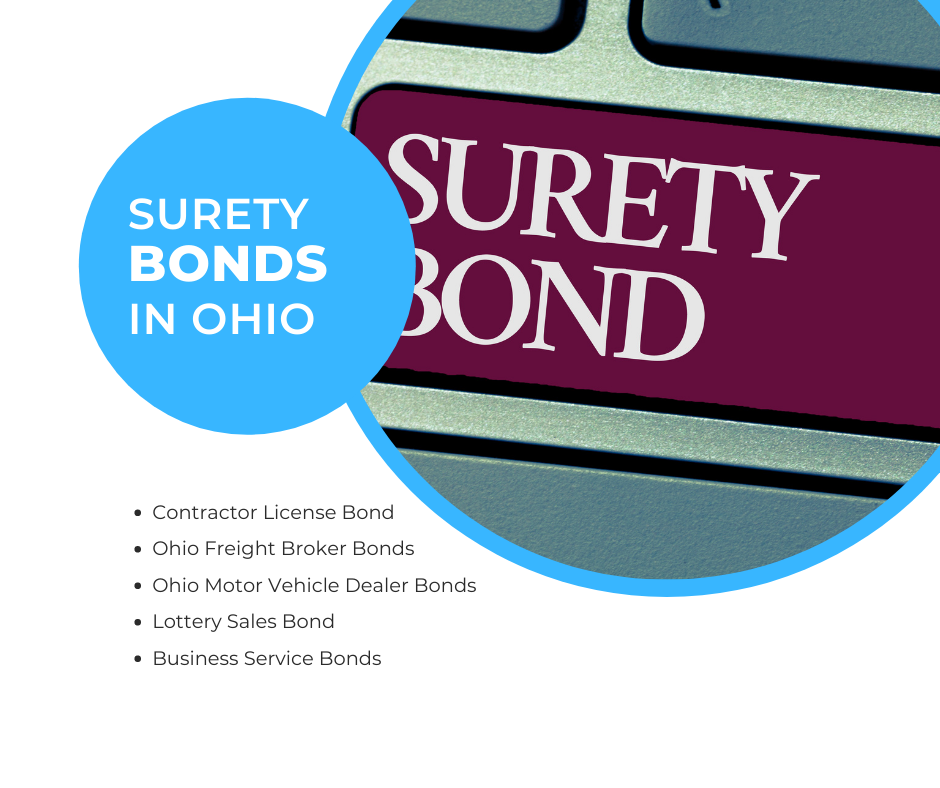
bookmark_borderWhat are the Most Common Surety Bonds in Ohio?

Surety Bonds in Ohio - What is a Contractor License Bond in Ohio - Surety Bonds in Blue and White Background

What is a Contractor License Bond in Ohio?

A contractor license bond is required by the state to work on any project worth more than $5000. Both commercial and residential projects require contractor license bonds, so it’s crucial to know when you’ll need one. The bond protects the homeowner against contractors who do not finish their work or use substandard materials.

Contractors in the state of Ohio are required to obtain a licensing bond, which is known as an Ohio Contractor License Bond. It protects the contractor’s good faith and client protection, as well as a mechanism for a customer to recover money paid out in the event of a disagreement over work performed by an unlicensed contractor.

What are Ohio Freight Broker Bonds (BMC-84), and how can I get one?

Freight Broker Bonds in Ohio are a type of “advance payment” for a company that provides freight brokerage services to a company. The bond is required to operate as a broker in Ohio and is issued by the Ohio Department of Development.

This sort of bond differs from others in that it does not guarantee recovery if the business fails or defaults on any contracts; instead, it ensures that clients are paid first, followed by creditors, through periodical payments made by the state of Ohio.

These bonds guarantee that any cargo that is lost, damaged, or stolen will be reimbursed up to the bond’s value.

Before they can collect money from customers, the Ohio Board of Public Utilities (BPU) requires all freight brokers to post a bond with the BPU. The bonds must be renewed every two years and are available from your local insurance agent or broker at a reasonable price.

What is the definition of Ohio Motor Vehicle Dealer Bonds?

Motor Vehicle Dealer Bonds in Ohio are a sort of surety bond that protects the state from financial losses caused by a dealership’s failure. Ohio motor vehicle Dealer Bonds ensure that the state is repaid for any outstanding debts and can continue to provide services to its inhabitants if a dealer defaults on its responsibilities to customers.

Dealer bonds in Ohio also safeguard dealers against going bankrupt as a result of defaulting on debts owed to customers or other creditors.

All Ohio dealers are required to have Ohio Motor Vehicle Dealer Bonds. A dealer’s bond is a sort of commercial surety that ensures payments to the state, consumers, and creditors in the event that the dealer fails to fulfill their obligations. An insurance company or monetary deposits can be used to obtain the bond.

The bond amount is determined by the dealership’s size, thus it varies depending on the needs of each company. Depending on their inventory size and finances, some dealers may just only $50K in coverage, while others may require up to $500K.

What is a Lottery Sales Bond in Ohio?

The Ohio Lottery Sales Bond is a sort of financial assurance that the state of Ohio asks of anyone who wishes to sell lottery tickets on the state’s behalf. The bond is intended to protect consumers and ensure that funds are available in the event of legal action, such as a claim that the licensee deceived them.

Take, for example, a $2 scratch-off ticket from your neighborhood grocery shop. You’ve won ten million dollars! Unfortunately, you were never able to cash in your ticket because it was taken before you got the chance. If there aren’t enough funds set aside to cover this potential claim under this bond program, taxpayers could be on the hook for up to half of the damages.

Insurance companies buy this bond, which is then paid for using premiums from Ohio residents. You must be an authorized agent of the state of Ohio or have permission from one of these agents to purchase this bond. If you can’t afford it on your own, there are a number of groups in Ohio that will help you pay for it if you live in their district and they’ve been approved by the state.

What are Business Service Bonds in Ohio?

Ohio Business Service Bonds are a type of surety bond that ensures that an individual or business will faithfully perform specific duties. Architects, contractors, and engineers are among the most common Ohio Business Service Bonds.

Bonds ensuring the performance of fiduciaries who handle assets under someone else’s power or control, fidelity/theft bonds to protect against losses caused by dishonest personnel, and bail bondsmen licenses are all examples of Ohio Business Service Bonds.

Bonds for those that provide services to other firms are known as business service bonds. If you work as an IT consultant and your clients include other businesses, you’ll need a business service bond to protect yourself in the event that one of them fails to pay. This article will explain the many types of service bonds and what they accomplish so that readers may determine which is best for them.

Interested? Know more by checking out Alpha Surety Bonds!